

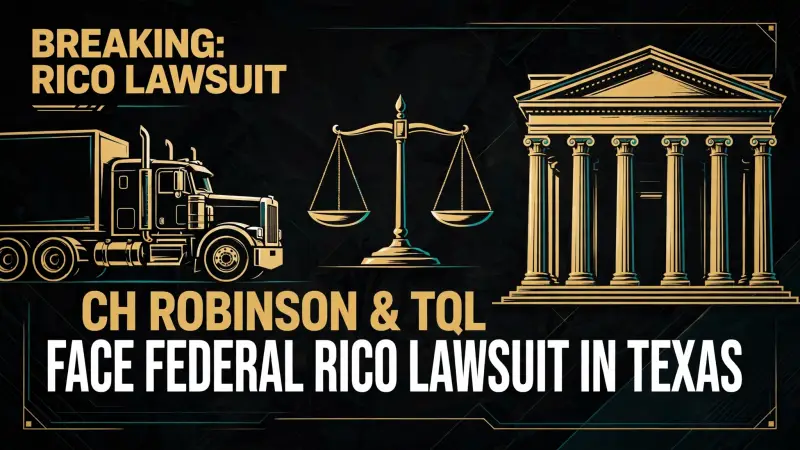
Trucking is about to have a very uncomfortable conversation, and it’s bigger than cheap freight.
Two of the largest freight brokers in the country — C.H. Robinson and Total Quality Logistics (TQL) — are now facing a federal lawsuit filed in Texas by six trucking companies. And this isn’t the typical “broker didn’t pay” claim.
The lawsuit alleges RICO violations. The carriers claim both brokers benefited from freight moving through carrier networks that were allegedly not operating the way a compliant carrier should be operating.
Important context before we go any further: These are allegations in a lawsuit. No court has decided who is right or wrong. C.H. Robinson has already responded publicly, pushing back hard, saying the claims are incorrect and do not accurately reflect how the freight market actually works.
So this post isn’t about who’s guilty. It’s about what this case is forcing the industry to talk about.
What The Lawsuit Is Actually Alleging
According to the filing, the issue isn’t just rate cutting.
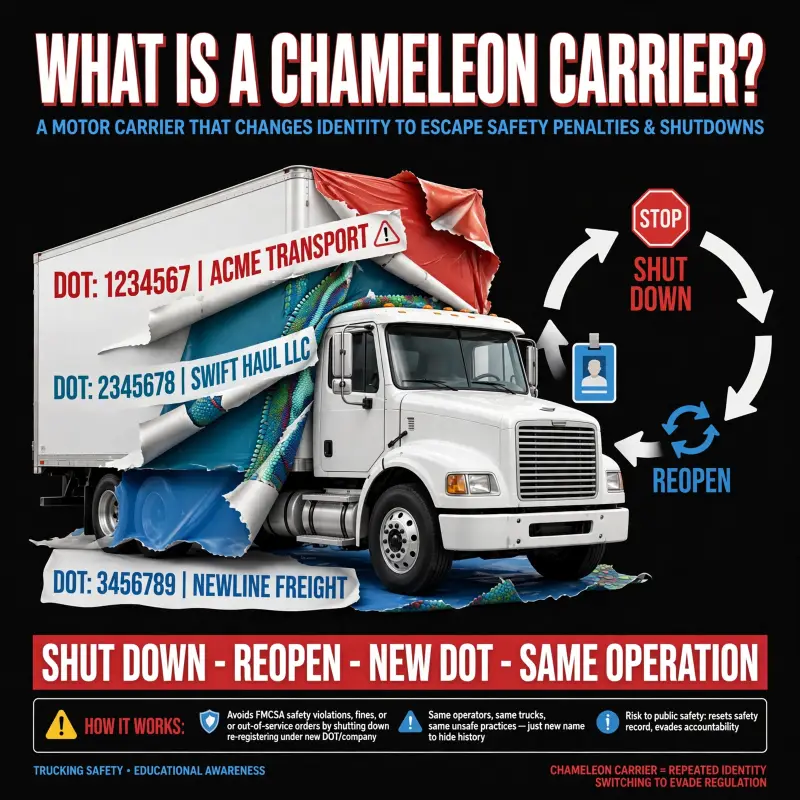
The carriers allege that legitimate, compliant trucking companies were being priced out of freight while loads were allegedly being moved through networks of questionable carriers. The suit also touches on what the industry calls “chameleon carriers” — operations that run into compliance or safety issues under one DOT/MC, shut that entity down, and allegedly reappear under a new name and number.
If you’ve been hauling for a while, you’ve felt that part. You’re sitting with real insurance, real compliance, a clean authority, a good driver, real maintenance and fuel costs — and you’re looking at a load board number that doesn’t even make sense on your calculator.
C.H. Robinson’s position, in simple terms, is that brokers don’t invent market rates. Supply and demand does.
When there are more trucks than loads, shippers have leverage and rates drop. When freight is heavy and trucks are tight, carriers have leverage and rates go up. Any experienced dispatcher or carrier who has lived through a produce season or a January slowdown has watched that swing happen in real time. On that point, they are not wrong.
The market is real. But so are compliance and vetting. Both things can be true at once.
What This Means For You If You’re A Small Carrier or Dispatcher
This is why I tell new carriers all the time — booking the load is only 10% of the job.
1. Know your cost-per-mile. If you don’t know what it actually costs you to run, you can’t tell if a load is cheap or if the market is just exposing something else behind the rate.
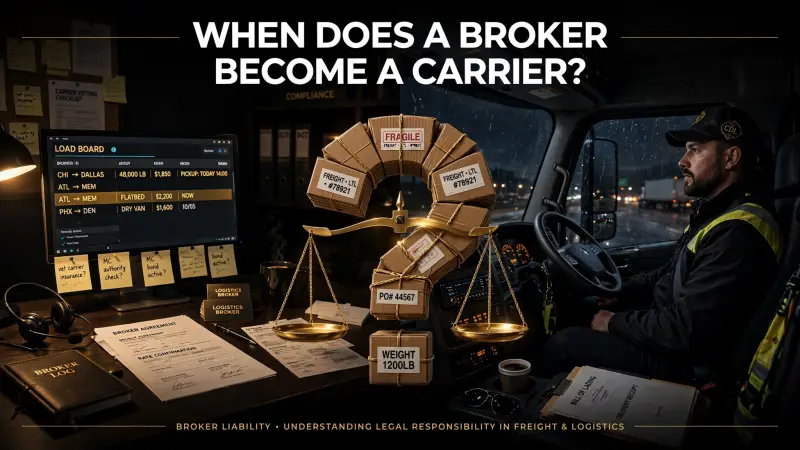
2. Carrier vetting is not just a broker problem. Know who you’re double-brokering with, who you’re interlining with, who you’re teaming with.
3. Compliance is your competitive advantage now. Insurance, safety scores, ELD, UCR, real authority — it’s not paperwork, it’s protection.
4. Dispatchers have to learn the business behind the load board. If all you know how to do is refresh DAT and ask “can you do better on the rate?” you are going to get left behind. The people who understand why a rate is what it is will move completely different from the people who only know how to click and book.
This lawsuit is worth watching, not for the drama, but for what it tells us about where this industry is headed.
I’ll keep breaking it down as it moves through court.
Q
Robinson Logistics | iDispatch
Disclaimer: This article is for informational purposes only and is based on allegations contained in a pending federal lawsuit and public statements. It is not legal advice and does not make any determination of guilt or liability. All parties are presumed innocent of the allegations until proven otherwise in court.
Add comment
Comments